🚚 Free Worldwide Shipping on All Orders!Shop Now

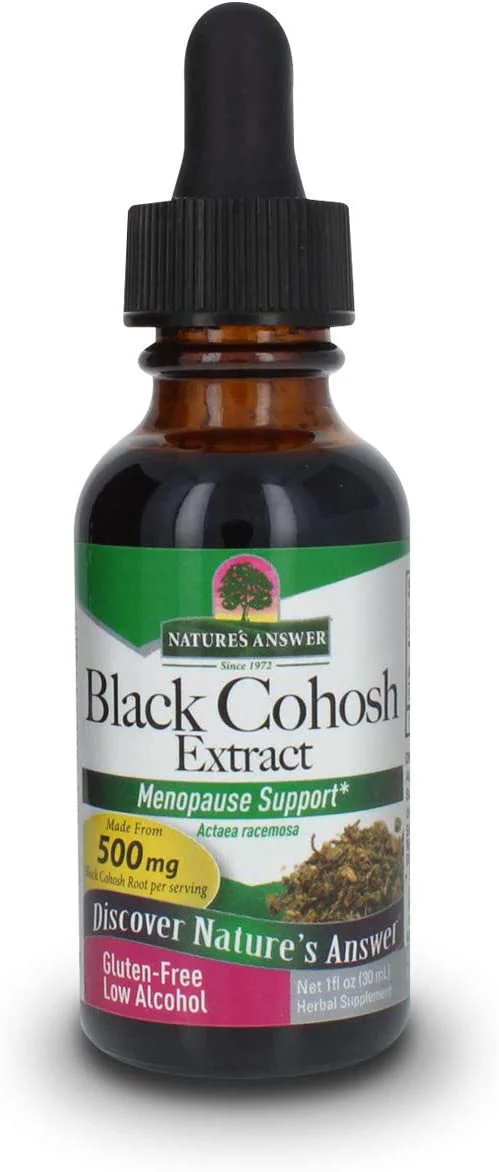
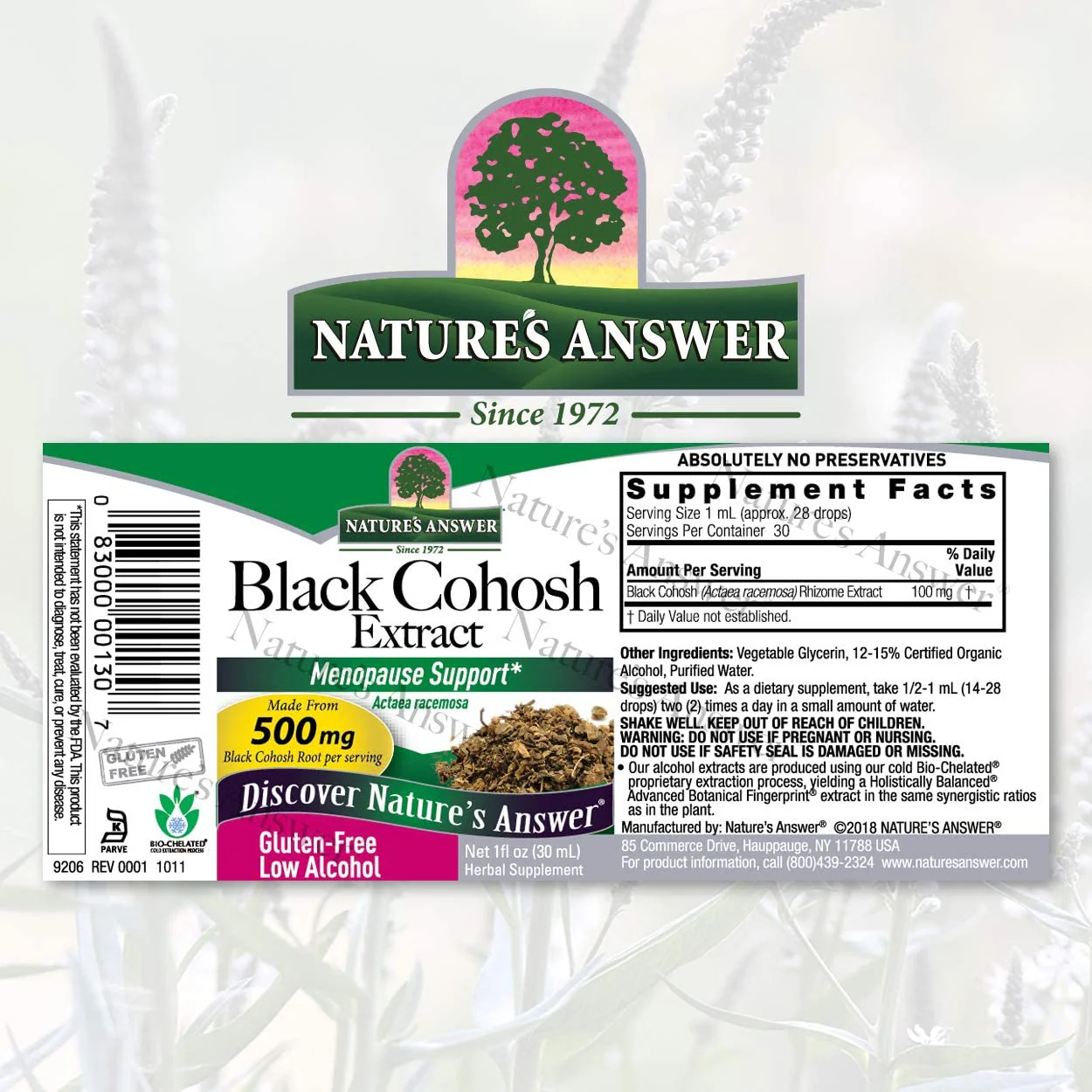
NATURES ANSWER BLACK COHOSH EXTRACT 1Oz
- Black Cohosh, also known as (Actaea racemosa) is a perennial plant native to North America. It’s also found growing wild in Europe, having been self-seeded from cultivated plants. The word “Cohosh” is a Native American word which means “rough” referring to the plant’s gnarled root structure. Throughout history it has also been known as snakeroot, black bugbane, and rheumatism weed.
- Black Cohosh grows from four to eight feet in height. It has a stem with tiny white flowers that have numerous stamens. But it’s the roots and rhizomes (underground stems) that are important to make dietary supplements.
- Black Cohosh has a long history of use by Native Americans and European settlers. The Native Americans used it to treat menstrual irregularities, while the European settlers used Black Cohosh as a tonic to support women’s reproductive health.
- In the 1990s Black Cohosh became popular as a growing number of women sought more natural alternatives for menstrual issues and hot flashes associated with menopause.
$4.55
Original: $12.99
-65%NATURES ANSWER BLACK COHOSH EXTRACT 1Oz—
$12.99
$4.55Product Information
Product Information
Shipping & Returns
Shipping & Returns
Description
- Black Cohosh, also known as (Actaea racemosa) is a perennial plant native to North America. It’s also found growing wild in Europe, having been self-seeded from cultivated plants. The word “Cohosh” is a Native American word which means “rough” referring to the plant’s gnarled root structure. Throughout history it has also been known as snakeroot, black bugbane, and rheumatism weed.
- Black Cohosh grows from four to eight feet in height. It has a stem with tiny white flowers that have numerous stamens. But it’s the roots and rhizomes (underground stems) that are important to make dietary supplements.
- Black Cohosh has a long history of use by Native Americans and European settlers. The Native Americans used it to treat menstrual irregularities, while the European settlers used Black Cohosh as a tonic to support women’s reproductive health.
- In the 1990s Black Cohosh became popular as a growing number of women sought more natural alternatives for menstrual issues and hot flashes associated with menopause.