🚚 Free Worldwide Shipping on All Orders!Shop Now

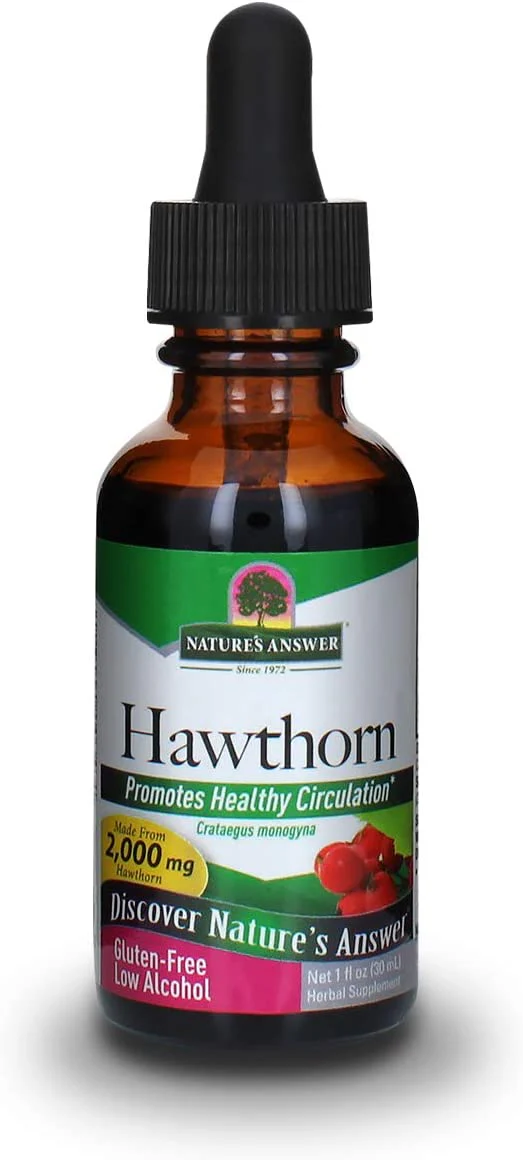
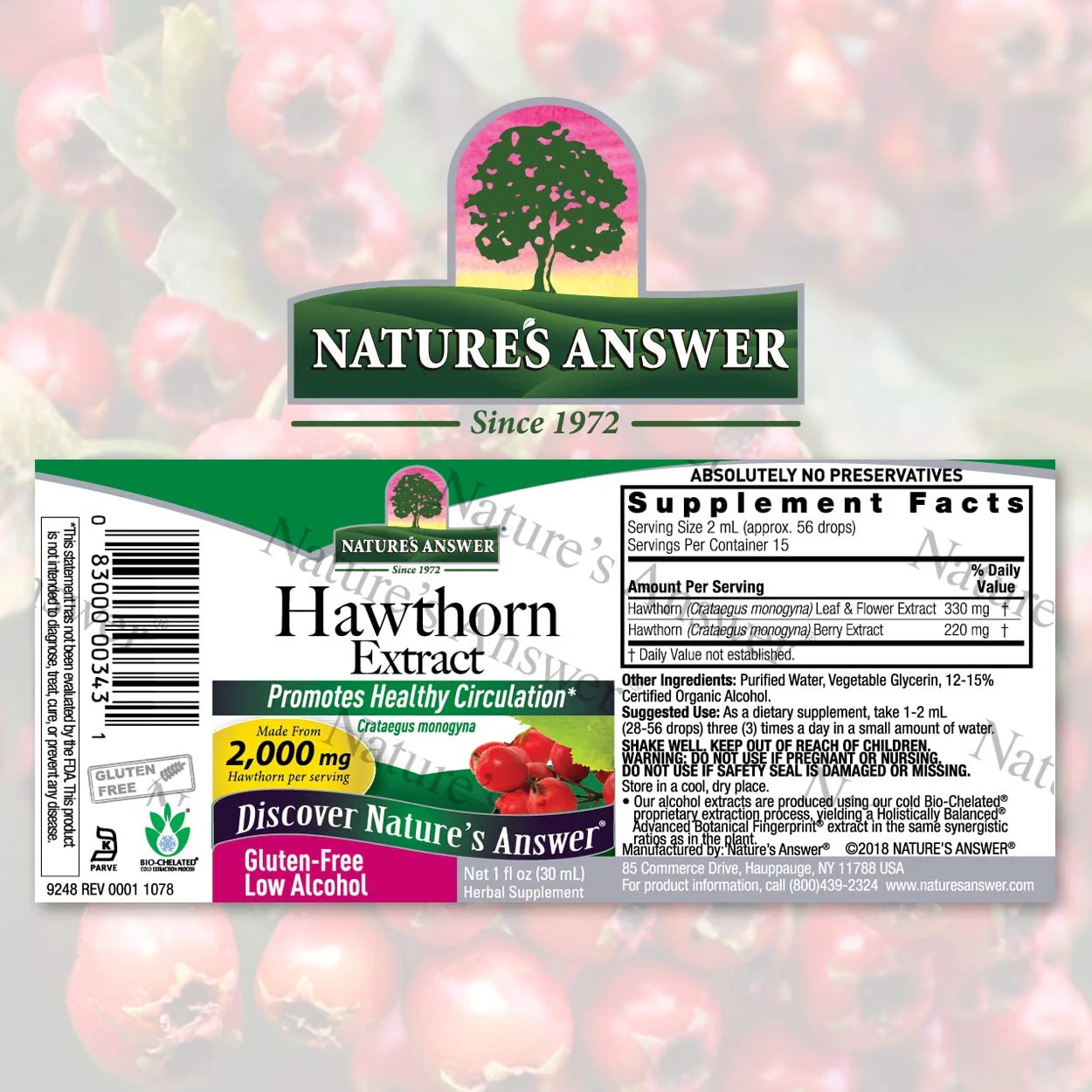
NATURES ANSWER HAWTHORN EXTRACT 1 OZ
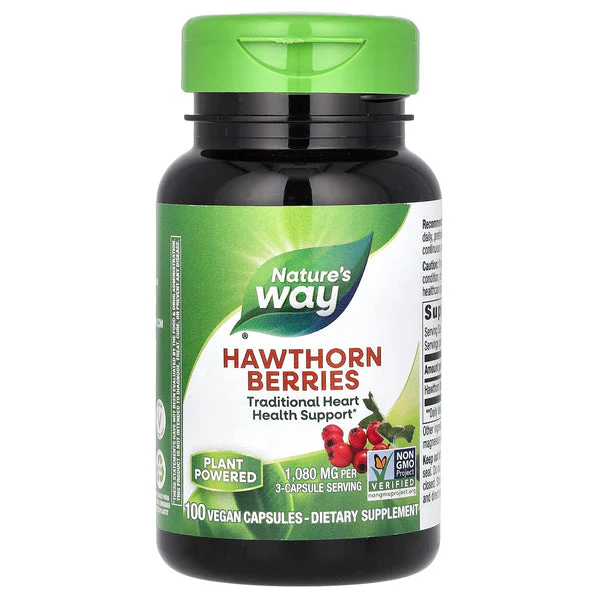
- Hawthorn (Crataegus laevigata, Crataegus monogyna, Crataegus oxyacantha) is a tree that grows in temperate areas of the world, including Europe and the eastern United States. Common names include English hawthorn, may-tree, may-bush, whitethorn, and hawberry. The hawthorn tree appears as a favorite in a wide variety of ceremonial uses throughout history.
- Throughout history, it has traditionally been used as a tonic to support heart health.
- Energetically, hawthorn is considered slightly warm and has a sweet-sour taste. It is also considered useful in supporting the spiritual and emotional well-being that is linked to a happy heart. Many parts of this tree have been used, including the leaf and flower, as well as the berries, which resemble crabapples.
- Chemical constituents include oligomeric procyanidins (procyanidin B-2, epicatechin, catechin), flavonoids (kaempferol, quercetin, apigenin, luteolin, rutin), amines (phenylethylamine, tyramine, choline), and a variety of anthocyanidins.
$3.99
Original: $11.39
-65%NATURES ANSWER HAWTHORN EXTRACT 1 OZ—
$11.39
$3.99Product Information
Product Information
Shipping & Returns
Shipping & Returns
Description
- Hawthorn (Crataegus laevigata, Crataegus monogyna, Crataegus oxyacantha) is a tree that grows in temperate areas of the world, including Europe and the eastern United States. Common names include English hawthorn, may-tree, may-bush, whitethorn, and hawberry. The hawthorn tree appears as a favorite in a wide variety of ceremonial uses throughout history.
- Throughout history, it has traditionally been used as a tonic to support heart health.
- Energetically, hawthorn is considered slightly warm and has a sweet-sour taste. It is also considered useful in supporting the spiritual and emotional well-being that is linked to a happy heart. Many parts of this tree have been used, including the leaf and flower, as well as the berries, which resemble crabapples.
- Chemical constituents include oligomeric procyanidins (procyanidin B-2, epicatechin, catechin), flavonoids (kaempferol, quercetin, apigenin, luteolin, rutin), amines (phenylethylamine, tyramine, choline), and a variety of anthocyanidins.